




Like this page on FB.com / Facebook:





Type your research (Generation or Names)
| Portrait | Generation |
|---|---|
 Marguerite de Navarre by Jean Clouet around 1527 |
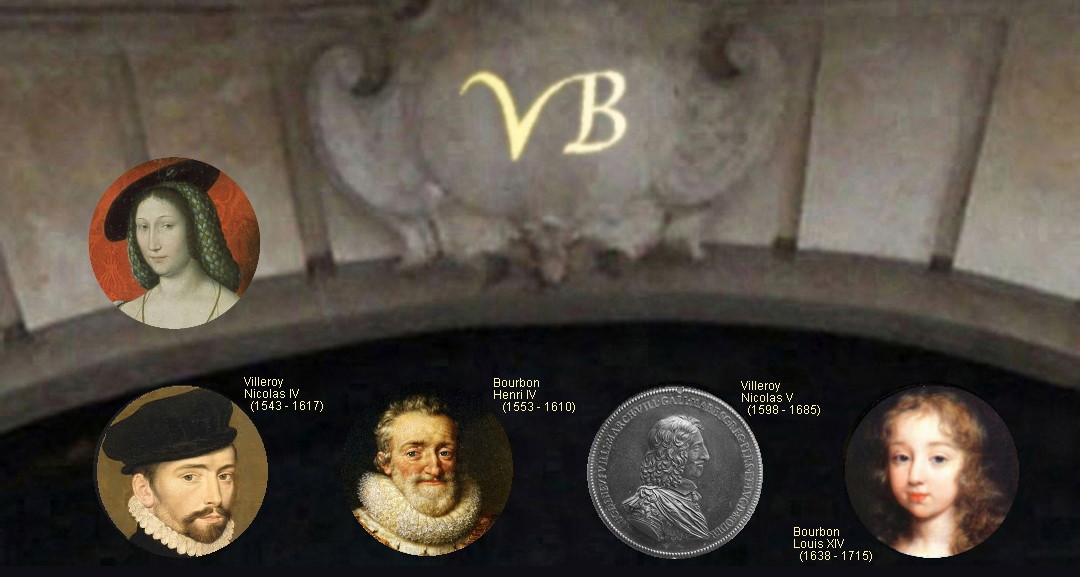
Marguerite de Navarre (1492 - 1549) Princess of France, sister of King Francois I Queen of Navarre, writer married to Henry II of Navarre (1503 - 1555) came to the Hotel de Villeroy Bourbon (VB) / Cremerie de Paris for receptions and litterary meetings two children - Jeanne d'Albrecht (1528 - 1572) - Jean de Navarre (1530 - 1530) grandmother of the Bourbons The "B" of VB.com Not everybody knows that Margurite de Navarre has already been to her square .. over 500 years ago At the times it was the jonction of rue St Honore and rue de la Ferronnerie. Rue des Halles, (imagined 1860 by Empress Eugénie) did not yet exist. Marguerite was a friend of Nicolas II de Villeroy previous owner of the house and grandfather of Nicolas IV de Villeroy. Not everybody knows many historic people have been / are in connection with Cremerie de Paris. |
 Francois 1er by Jean Clouet around 1530 |
brother |
 Jeanne d'Albret | daughterJeanne d'Albret / Jehanne III Reine de Navarre (1528 - 1572)married to Antoine de Bourbon, King of Navarre. 5 children - Henri de Bourbon - Henri IV - Louis Charles de Bourbon - Madeleine de Bourbon - Catherine de Bourbon (1559 - 1604) 2nd generation The painting is in the Gallery des portraits du Chateau de Beauregard. |
 Henri IV, 1st Bourbon King |
grandsonHenri IV (1553 - 1610) |
 Louis XIII, 2nd Bourbon King |
great-grandsonLouis XIII (1601 - 1643)second Bourbon King of France married to Anne of Autriche (1601 - 1666) 4th generation 2 children |
 Louis XIV, 3rd Bourbon King (red circle) Tutor Nicolas V de Villeroy (lived at the VB mansion)  Philippe I of Orleans red circle), |
2 x great-grandsons- Louis XIV / Sun King (1638 - 1715)third Bourbon King of France oldest child of Louis XIII 5th generation played at the Cremerie de Paris as a child Nicolas V de Villeroy was his tutor lived at the Chateau de Versailles married to Maria Theresia of Spain (1638-1683) married to Francois d'Aubiné / Madame de Maintenon (1635 - 1719) - Philippe I of Orleans / Monsieur (1640 - 1701) duke of Orléans second child of Louis XIII only brother of Louis XIV played at the Cremerie de Paris as a child lived at the Chateau de St Cloud married to Henrietta of England married to Elisabeth Charlotte of Bavaria (la Palatine).  Nicolas V de Villeroy on a coin by Jean Vavin Nicolas V de Villeroy on a coin by Jean VavinNicolas V de Villeroy inherited the Hotel de Villeroy Bourbon (VB) from his grandfather Nicolas IV de Villeroy in 1617 In the late 1630ies he tore down the mansion to replace it by the present Hotel de Villeroy Bourbon accomplished in 1640.  Junichi Masuda, composer of the Pokemon Music with a coin of Nicolas V de Villeroy Masuda was fascinated by the history of VB, mainly due to it's links with the composer Igor Stravinsky |
 Philippe II d'Orleans on the right young Louis XV, 4the Bourbon King tutor François de Villeroy (son of Nicolas V de Villeroy) |
3 x great-grandsonPhilippe II of Orléans (1674 - 1723)Regent of France from 1715-1723 during the minority of his great-nephew Louix XV nephew of Louis XIV ancestor of Memo von Sachsen musician 6th generation |
 Louis Duc d'Orleans |
4 x great-grandsonLouis Duke of Orleans (1703 - 1752)married to Johanna of Baden-Baden (1704–1726) 7th generation |
 Louis Philippe I Duc d'Orleans |
5 x great-grandsonLouis Philippe I (1725 - 1785)Duke of Orléans married to Louise Henriette de Bourbon. 8th generation |
 Louis Philippe II |
6 x great-grandsonLouis Philippe II (1747 - 1793)did not like Marie Antoinette married to his cousin Louis XVI During French Revolution he adhered to the ideas of Jean-Jacques Rousseau was also killed in the French Revolution married to Louise Marie de Bourbon 9th generation |
 King Louis Philippe |
7 x great-grandchildrenLouis Philippe I (1773 - 1850) |
 Clementine d'Orleans |
8 x great-granddaughterClementine of Orleans (1817-1907)married August of Saxe Coburg and Gotha 11th generation 5 children - Clotilde of Saxe Coburg - Ferdinand Tsar of Bulgaria Clementine overlooks place de la Concorde next to the Tuileries Garden in Paris. She is the model for the city of Lille, one of 8 French city statues of the famous square.  Place de la Concorde is 2 km walking distance from the Cremeries de Paris, so many times we have been driving by the statue without realising that both Clementine's ancesters and descendents were connected to our history. |
 Clotilde de Saxe Coburg |
9 x great-granddaughterClothilde of Saxe Coburg and Gotha (1846 - 1927) married Joseph Karl of Austria They had 7 children, among them: "Margarethe" of Austria / Thurn und Taxis who might have been named after "Marguerite" de Navarre 12th generation |
 Margarethe of Austria / Thurn & Taxis was named after Marguerite de Navarre  Albert 8th Prince and Margarete von Thurn & Taxis with their 7 children in 1910 |
10 x great-grandaughterMargarethe of Austria (1870 - 1955)married Albert I von Thurn & Taxis (1870 - 1952) (nephew of Sissi of Austria) artist 13th generation knew Cremerie de Paris in relation it's Postal history They had 6 sons and one beautiful daughter Elisabeth Helène von Thurn und Taxis / Markgravine von Sachsen.  for their wedding Albert bought the famous Tiara, crown jewel of France The perl tiara was ordered by Napoléon III for his wedding with Eugenie de Montijo The 212 pearls and 1998 diamonds come from old old jewels of the Bourbons. The tiara can be seen in multiple historic paintings including those of Franz Xavier Winterhalter. Next to the crown of the Queen of England or the tiara of the Tsarina of Russia it is today the World's most valuable jewel. Sadly for the Postal family Gloria von Thurn und Taxis sold the tiara for the equivalent of 567.023 euro which might not even be 5% of todays value. Today the tiara is based at the Louvre, Gallerie Appolon 800 m walking distance from Cremerie de Paris / Place Marguerite de Navarre |
 Elisabeth Helene von Sachsen and her brother Karl August, later 10th Prince of Thurn & Taxis |
11 x great-grandchildrenKarl August von Thurn & Taxis (1898 - 1982) married Maria Anna of Braganza (1899 - 1971) grandaughter of King Miguel of Portugal 3 children Elisabeth Helene von Thurn und Taxis (1903 - 1976) married Margrave Friedrich Christian von Meissen (1893 - 1968), son of the last King of Saxony, Frederick Augustus III 6 children 14th generation |
Johannes, 11th Prince von Thurn & Taxis Maria Anna von Sachsen Gessaphe Maria Anna von Sachsen Gessaphe Mathilde (Aja) von Sachsen |
12 x great-grandchildrenchildren of Karl August von Thurn und Taxis- Clotilde von Liechtenstein (1922 - 2009) married to Johann von Liechtenstein (1914 - 2004) 5 children - Mafalda von Thurn und Taxis (1924 - 1989) married to Franz von Thurn und Taxis (1915 - 1997) one child  Johannes von Thurn & Taxis (1926 - 1990) in the picture with Soraya Esfandiary, former Queen of Iran  Johannes Thurn & Taxis is a key person in the history of Cremerie de Paris 1986 pushed young Ben Solms to bring fallen asleep history back to life In the center of the picture Aimee de Heeren, former secret service agent, WW2 resistant fiancée of Joe Kennedy Jr other key person in the history of Cremerie de Paris See also the Telecom history of the family in direct relation with Phone Book of the World edited from place Marguerite de Navarre Thurn-Taxis.com children of Elisabeth Helene von Thurn und Taxis - Maria Emmanuel von Sachsen (1926 - 2012) oldest child, very original no children - Maria Anna von Sachsen (1929 - 2012) married Roberto of Gessaphe 3 sons  - Mathilde (Aja) von Sachsen Coburg (1936 - 2018) doctor for children in Innsbruck friend of Cremerie de Paris was watching every Cremerie Pop Up Store from Austria Mathilde had one only child Johannes Albert (1969-1987) who played with the editor of this article when they were small. Johannes Albert von Sachsen died in an accident at age 17. 15th generation |
 Memo von Sachsen Gessaphe with Ben Solms (Cremerie de Paris) in front of the staircase named after his 13 x great-grandmother Marguerite de Navarre Memo von Sachsen helps Cremerie de Paris in history research. |
13 x great-grandsonchildren of Maria Anna von SachsenAlexander von Sachsen Memo von Sachsen Gessaphe interior architect, art consultant Karl August von Sachsen Gessaphe 16th generation 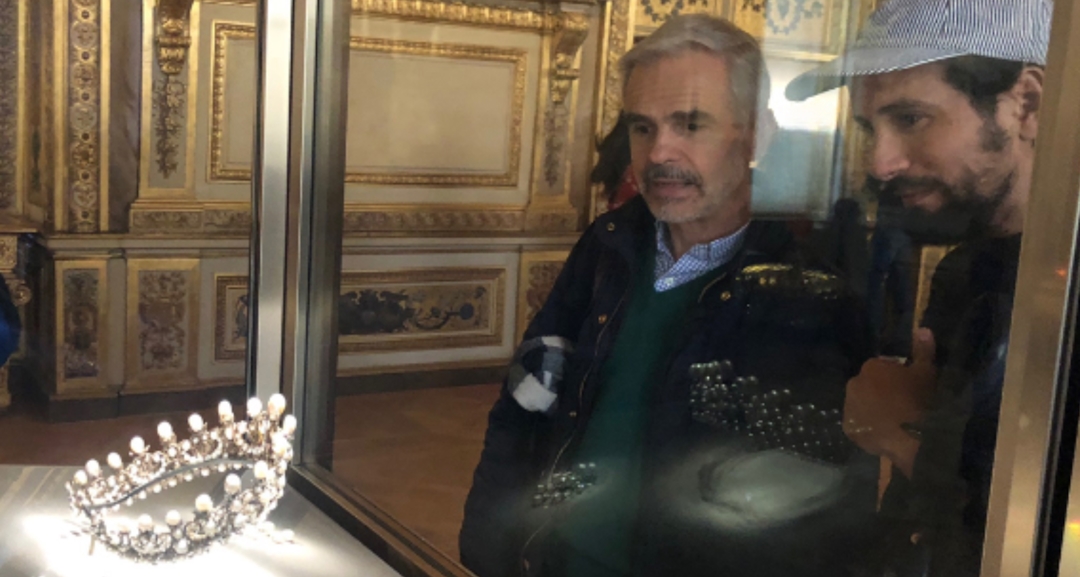
Memo von Sachsen Gessaphe, with David Aaron Benali (Cremerie de Paris) and Eugenie's tiara now at the Louvre |
Phone: +33 1 42 21 11 11
Address:
Hotel Villeroy Bourbon,
11 rue des Déchargeurs, 75001 Paris
Email:
b@vb.com
Website:
Very Beautiful by VB.com
Social:
Instagram


Acer
Adopte Un Mec
Amazon
Charal
Fanta
Final Fantasy
Game of Thrones
L'Oréal
Metal Gear
Microsoft
Nike
Onitsuka Tiger
Pokemon
Renault
Sodexo
Shadow
Siemens
Starbucks
Under Armour
UGG
Weight Watchers
Louis XIV
Henri IV
Aimee de Heeren
Louis François Cartier
Coco Chanel
Soraya Esfandiari
Empress Eugenie
Thierry Hermes
Marguerite de Navarre
Alexei Romanov
Anastasia Romanov
Dmitri Romanov
Maria Romanov
Olga Romanov
Tatiana Romanov
Carl Solms
Friederike Solms
Philipp Solms
Nicolas V de Villeroy
Nicolas IV de Villeroy
Felix Yusupov
Vincent van Gogh
(c) Copyright VB.com


 Leonardo da Vinci (1452 - 1519) was a friend of both
